Sunday, November 17, 2019

Lasikaupunki (New York Trilogy #1) by Paul Auster (City of Glass)


Ensimmäinen osa trilogiaa, joka on julkaistu myös yhtenä teoksena. Tämä kirja/novelli ainakin vaikuttaa itsenäiseltä teokselta. Kirjan eräänlaisena teemana on identiteetti ja identiteetin omaksuminen. Tarina on ulkoisesti eräänlainen jännityskertomus, mutta tämä rakenne on enemmän vain hahmo, mihin tarina on rakennettu.
New Yorkista kotoisin oleva jännityskirjailija, Daniel Quinn, joka kirjoittaa salanimellä sarjaa salapoliisista ja joka kokee kirjojensa salapoliisin jonkinlaiseksi alter egokseen, saa yöllä puhelun, jossa etsitään yksityisetsivää nimeltä Paul Auster. Hetken mielijohteesta hän päättää teeskennellä etsivää ja sopii tapaamisen Peter Stillman nimisen erikoisen miehen kanssa, joka uskoo isänsä, Peter Stillmanin, aikovan murhata hänet ja haluaa yksityisetsivän varjostavan tätä isää. Daniel Quinn, joka siis teeskentelee olevansa Paul Auster, varjostaakin Peter Stillmann vanhempaa, joka tuntuu harhailevan kaupungilla päämäärättömästi. Lopulta Daniel Quinn tapaa myös oikean Paul Austeren, joka on kirjailija, mutta ei salapoliisi ja koko kaupungista ei löydy Paul Austeria, joka olisi salapoliisi. Kirjan lopussa on vielä pieni tarinankerronnallinen jippo, joka vielä niksauttaa kertomuksen hiukan eri suuntaan. Kyseessä on varsin monimutkainen kertomus pituisekseen, josta on kyllä mahdollista nauttia pinnallisellakin tasolle, mutta jonka täydellinen ymmärtäminen todennäköisesti vaatisi useampia lukukertoja.

A very complex story which plays on identity in many levels, where assumed names, pretending to be some else and complex actions by the characters are the main point. A book which should be read a few times before it really can be understood.

144 p.

Friday, November 15, 2019

Analog Science Fiction and Fact, November-December 2019


An Eye for an Eye • [The Ascension (Jerry Oltion)] • novelette by Jerry Oltion

A human spaceship lands on an alien planet with aliens who apparently are near to an industrial revolution. A convoy of caterpillar-like aliens approaches the ship. One of them breaks off his eyestalk and gives it to the humans. The expedition is a bit baffled but takes it, and the aliens leave. The aliens seem to lose their interest, and even seem irritated when they meet the humans again, and when the humans refuse to eat a severed finger offered by the aliens, the aliens seem offended. Meanwhile, the severed eye seems to contain surprisingly complex and extensive neuronal structures. The story continues an earlier one, this time from the human viewpoint. A pretty good one, even if there were shades of an idiotic plot – it was painfully obvious for the reader what was happening even when characters were in the dark. ****-
Formless • novelette by Gary Kloster
A soldier approaches a planet. It has been invaded by the “formless”, who are disgusting creatures who have destroyed humans on Earth and have apparently followed them here. The soldier’s ship is hit and he falls on the mercy of the formless. But not everything is what it looks like. A pretty nice story. ***+
Moon Santa Mongo • short story by John Edward Urh
A shop owner on the moon has had some hard times. There are not many tourists and his assistant left suddenly. He hires a veteran who seems homeless and apparently has memory problems. A fairly warm-hearted Christmas story. ***½
The Prince of Svalbard: A Saga of the Thaw • short story by Louis Evans
A Viking saga of a raid to Svalbard seed vault. Ponderous language and I didn’t really get into it. I wonder what is the timespan after the accident - at first, it seemed like centuries and then there was someone alive? **
Filaments of Hope • short story by Marissa Lingen
A Martian colony was canceled. The developer of a lichen suitable for the production of food there is invited to Iceland. They want to use the lichen for food production. A pretty sketch-like story. **+
Just a Guy and Some Aliens • short story by Michael Carroll
A probe is sent to a star with a planet on the goldilocks zone. It can analyze DNA and send it to Earth, where it can be used to build the creature it is from. It turns out that something went a little wrong. A stupid story on so many levels. All the science sucks heavily – alien life forms with exactly similar DNA structure? No pre-analysis of DNA whatsoever? DNA enduring decades in space? **
Wolves • short story by Edward Ashton
An employee/slave/pet is sent to track a lone woman he saw digging through trash. He is supposed to kill her. The setup is shown slowly and it would be a spoiler to describe it in detail. There are apparently alien invaders who use humans for menial tasks, but there are also still a few “wild” ones around. A very nice short story. ****-
Binary • short story by Rajan Khanna
A recording of a person is used as a mind of a bot which is sent to study a possible alien artifact. She seems to have hallucinations of the past events of her life. There also seems to be something strange about the AI which governs how her ship behaves. The idea was fairly good, but the story was too short, there was no real emotional attachment to the main “character”. ***½
Sojourner • short story by Craig DeLancey
A man is trying to help an AI which apparently is threatened by a government man who wants to hunt it down and destroy it. He escapes a raid with the AI but gets caught. The government man has an alternative explanation about what is going on. A very good story which turns around very nicely. ****-
Martian Fever • novelette by Julie Novakova
The first Mars expedition is financed by a billionaire. After they start the exploration, one member gets sick with a Martian bug. According to the pre-agreed rules, that means no one can go back home, to prevent bringing back infections to Earth. That isn’t something everyone is too happy about – and if they don’t find the cure, their chance of living on Mars isn’t very good, either. A pretty good story which concentrates more on people than on events. And the people seem real and behave in a fairly consistent and logical way. ****-
Keep the Line Tight But Not too Tight, or Esteban and the Moon • short story by J. M. McDermott [as by Joe M. McDermott]
Workers on the Moon who build generation ships are stressed about the pressures. I didn’t really get into the story, it seemed mainly to be bitching about living on the Moon and about other people. The main character felt like a very irritating and unhappy person. And I didn’t get some of the technology: habitats on the Moon are spun for artificial gravity, but they stopped for the night? Why in hell? Wouldn’t that be extremely uneconomical? There are some other questionable details, also. The writing felt somewhat clumsy and hard to get. **-
Yamadori • short story by Stephen R. Wilk
A man who builds miniature robots is asked to build a small human-looking robot with moving capability, with hollow arms with room to stick meat into. As the builder is more than a little baffled, he wants to see what his robot is used for. (For feeding a miniature version of a man-eating plant.) The writing was fairly nice but there wasn’t really much plot, just a demonstration of the robot and its use. ***½
Follow, Past Meridian • short story by Mark W. Tiedemann
A group of youngsters goes for some sort of initiation quest in a post-apocalyptic world where there seems to be a lot of working tech still around. They have heard rumors that an “American” might be around and they want to see it. Along the way, they meet a mystery woman. Far too sketchy and short, it feels like a short prologue for the real story. ***
Empty Box • short story by Allison Mulvihill
A man has a discussion with his girlfriend, whom he has never seen in person. The girlfriend’s name is Eliza and they talk about artificial intelligences which are better than just passing a Turing test. Oh, I wonder what the girlfriend really is? A short and simple story. ***-
The Quarantine Nursery • short story by Aimee Ogden
A well-to-do family's small children are taken care of by robots in a germ-free environment. Influenza is especially considered as horrific. I wonder if the story happens in some sort of alternate world where there are no vaccines and social norms are from the fifties. Women are at home cooking for their husbands and wear something pretty when he comes home. As a matter of fact, the story feels exactly like it would be at home in Galaxy magazine from 1954 or something. Otherwise, it is a pretty good and well-told story. ***½
Kamsahamnida, America • novelette by Guy Stewart
An elderly astronaut is testing a spaceship with simulations when news breaks out: Koreans have sent a ship to the Moon. All space-capable nations scramble to send their own ships to be first on the Moon since the 70s. The Korean ship seems to approach the Moon at an impossible speed. As the other ships approach the Moon, there is even some attempt to sabotage other “contestants”. Extremely stupid story: apparently everyone had a ship which was able to go to the Moon, but couldn’t be bothered. When one nation goes there, it suddenly is imperative to be there first. It doesn’t make any sense. If it is so important, why wait if it almost trivial to launch an expedition in a few hours? And hitting another ship with a passive “missile” would be a billion-to-one chance. The writing is OK, but every aspect of the plot is pedestrian. **½
You Must Remember This • novella by Jay O'Connell
Runaway AI has destroyed a part of town and “archived” many people who were living there. It is possible to rebuild and wake those people, but it is expensive, and will not be done unless someone will sponsor it. A woman who was pretty maladjusted has been awakened. Her sponsor wants to remain unknown. Her ADHD can be cured, and after some trepidation, she takes the cure. But can she adjust to a new life in the future, and with a slightly different personality than what she was used to? A pretty nice and well-told story. ****-

Monday, November 4, 2019

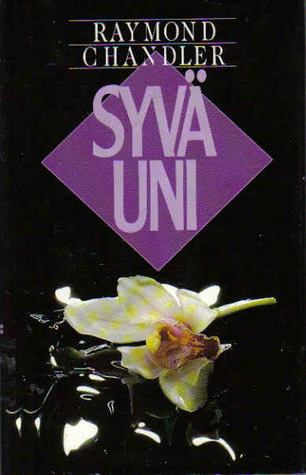
Syvä uni (The Big Sleep) by Raymond Chandler,


A classic detective story. In fact, it is so classic that the plot felt familiar, even though I haven’t ever read it before. I saw everything in black and white in my mind’s eye, and there are plenty of movies with a similar plot. And there’s plenty of movies from this book. It’s smoothly and well written with an appropriately convoluted plot.

Klassista klassisempi yksityisetsivätarina, kertomus, joka oikeastaan aloitti oman genrensä, noir-tyyppisen dekkaritarinan. Tarina on kerrottu minämuodossa kyynisen yksityisetsivän Phillip Marlowen näkökulmasta. Rikas, vanha, ja sairas mies palkkaa hänet tutkimaan miksi hiukan hämäräperäisen maineen omaava kirjakauppias on kiristämässä miehen tytärtä. Tarinassa on lopulta monta mutkaa, mutta ruumista ja monta kohtalokasta kaunotarta. Marlow itsekin loppua kohden joutuu pahaan pinteeseen, mutta mistä ei ylimielisellä käytöksellä, huulenheitolla ja naisten viettelemisellä kuiville selviäsi?
Vetävää tekstiä, mutta tarina oli aika tuttu, sillä samankaltaisia elokuvia on melkoisen monta – ja ihan tästä samasta kirjasta olevia elokuvia on varmaan ainakin pari kolme. Itse olen varmasti jonkin niistä kyllä joskus nähnyt. Kirja näki koko ajan sielunsa silmin mustavalkoisena 4:3 kuvasuhteella kertojaäänen kera – kirjan kertojaääni sopi hyvin siihen mielikuvan elokuvan kertojaan.

238 pp.

Wednesday, October 30, 2019

Fields of Fire (Frontlines #5) by Marko Kloos


The series continues pretty much from where the last book ended. The main characters can take a little breather before the next battle, but that one is going to be huge. Humans are going for the offensive for the first time. They are going to take Mars back from the aliens. The first parts of the battle go almost as planned and the alien seedships guarding Mars are destroyed. When the ground troops land, things start to go worse. Apparently, the aliens have finally learned some tactics and don’t just blindly run to the gunfire anymore.

The book is as entertaining as the earlier parts. The main characters feel real and someone one can root for. They are not Übermensch who can always do everything without second-guessing themselves.

The book has still some technical problems. The author seems to imagine that high-speed railguns have an effective range in space. No, they don’t. There might be some targeting issues, but there is no limit to their range. Their speed (and their explosive effect) doesn’t get any slower, ever; not even after light years. Those were small things though; the book was entertaining and easy to read on a mobile phone during lunch hours and commutes.

293 pp.


Monday, October 28, 2019

Donna Tartt: Jumalat juhlivat öisin (The Secret History)


A classic book, which is a mixture of a literate novel, a detective story and a book of human relations. It was fairly interesting, but pretty verbose. There is some interesting character development, but I didn’t really understand the motivations of many characters; just boredom and too much money? And most of the characters didn’t really have vast, disposable income anyway.

Tunnettu ja kuuluisa (ja paksu) kirja, joka on ollut kirjahyllyssä jo pitkään odottamassa. Köyhähkö, vanhemmistaan vieraantunut nuori mies, Richard, lähtee toiselle puolelle maata opiskelemaan arvostettuun kouluun. Jostain mielestäni äärimmäisen huonosti perustellusta syystä ja yrittää päästä ja pääseekin lopulta aika erikoisen professorin johtamaan aika erikoiseen porukkaan, joka erikoistuu antiikin kreikan kielen opiskeluun ja oikeastaan muiden aiheiden opiskelu on lähes kiellettyä. Porukka on aika erikoista ja paljolti eri yhteiskuntaluokasta lähtöisin olevaa kuin kertojahenkilö, jolla ei käytännössä ole lainkaan rahaa käytettävissään. Ryhmä on erittäin. kiinteä, etenkin sen alkuperäiset jäsenet. Kuinka kiinteä ja mitä kaikkea he yhdessä tekevät selviää Richardille vasta vähitellen.
Kirja alkaa murhalla. Siihen, miten tähän päädytään (ja toiseen, jo edeltävään, murhaan) kuluu useampia satoja sivuja). Kirjan aloittavan murhan kohteena on yksi ryhmän jäsenistä, jonka psyykkinen tila on epävakaa. Hän tietää ryhmän jäsenten ensimmäisestä murhasta (tai mahdollisesti taposta, yksityiskohdat ovat jopa mukana olleille hiukan epäselviä) käytännössä kiristää rahakkaampia ryhmän jäseniä ja vaikuttaa sekoavan koko ajan enemmän. Ei siis ole mitään muuta keinoa, kuin päästä hänetkin hengiltä. Ongelmat eivät tällä ole ratkaistu, sillä syyllisyys teoista jää jäljelle ja se vaikuttaa eri hahmoihin jokaiseen omalla tavallaan.

Kirja, joka on sekoitus jonkinlaista dekkaria, ihmissuhdekertomusta ja ”korkeakirjallista” romaania. Se tutkii henkilöiden eroavuuksia ja ajatuksia aika kiinnostavalla tavalla, vaikka onkin paljolti kovin hidasliikkeinen, eivätkä henkilöiden motiivit ole välttämättä ihan kunnolla ymmärrettävissä. Kirja oli ihan kohtalainen ja hyvin sinällään kirjoitettu, mutta en sen klassikkomainetta ihan täysin ymmärrä.

745 s.

Saturday, October 26, 2019

Christian Rönnbacka: Operaatio Troijalainen


A nice police novel about an officer who infiltrates a vicious criminal gang which is smuggling drugs. An interesting main character who is ready to go slightly on the sidetrack of the law. The book has a pretty good balance of tension and sometimes wry humor.

Äänikirjana kuunneltu dekkari. Etukäteen kyseessä oli itselle aika tuntematon teos, kirjailija oli kyllä nimenä jotenkin tuttu.
Antti Hautalehto on rikosylikonstaapeli, joka päättää vaihtaa työpaikkaa avioeronsa jälkeen. Pienen paikkakunnan rauhallinen työtahti katkeaa, kun tarvitaan peiteoperaatioon ruotsinkielentaitoista, hyvät erätaidot omaavaa ja uskaliasta poliisia. Antti soluttautuu huumejengiin, joka pelaa sen verran kovilla korteilla, että kiinnijääminen olisi varma kuolemantuomio. Juuri ennen jengiin soluttautumistaan Antti oli kohdannut kiinnostavan naisen, joka oli tullut tekemään rikosilmoitusta jo jonkin veran aikaisemmin tapahtuneesta raiskauksesta. Asia oli tullut uudelleen ajankohtaiseksi, kun raiskaaja oli alkanut lähetellä uhkaavia tekstiviestejä naisen puhelimeen. Ja kaiken lisäksi joku hajottaa viattomia puutarhatonttuja ihmisten pihoista, kun näin julkeaan tekoon voisi syyllistyä?
Hyvin vetävää tekstiä, jossa pari kertaa kuuntelu loppui todella täpäriin paikkoihin, kun matka loppui vähän liian aikaisin. Pieniä ylläreitäkin normaalin dekkariformaattiin verrattuna kirjassa oli ja kerronta tasapainotteli rajun ja humoristisen välillä pääsääntöisesti aika mukavasti. Ehkä sarjan lukemista pitää jossain vaiheessa jatkaa.

349 p

Thursday, October 24, 2019

Olli Jalonen: Merenpeitto


The book continues the story which began in the first installment (it won the most prestigious literary award in Finland). Angus is an adolescent who has traveled a long journey at sea, from the island of St. Helens to Britain. At the end of the last book, he reacquainted with Edmond Halley, the famous scientist he met as a child. In this book Angus helps Halley and desperately wants his acceptance and even gets it on some level – but he – an uneducated boy – can never really be on the same level as Halley. Eventually, Angus follows Halley on his sea exploration to evaluate magnetic variations. The book was well written but lacked a clear focus the first part had. It was a nice and interesting read in spite of that.


Jatko-osa Finlandia palkinnon voittaneelle Taivaanpallo-kirjalle. Tarina jatkuu käytännössä lähes suoraan siitä, mihin edellinen kirja loppui. Lontooseen päässyt Angus työskentelee Edmond Halleyn suojattina. Hän auttaa Halleytä hänen tutkimuksissaan, on melkein perheenjäsen ja saa jopa syödä perheen kanssa samassa pöydässä, jos paikalla ei ole vieraita. Jos illalliselle osallistuu vieraita, hän joutuu tyytymään ruokailuun palvelijoiden parissa.
Anguksella on toiveita ja suunnitelmia, mutta Halley ei häntä ihan täysin vakavasti ota ja kohtelee oikeastaan loppuun asti osittain lapsena ja jonkinlaisena perheenjäsenen ja palkollisen välimuotona - hän ottaa perheen elämään osaa silloin kuin se on soveliasta, tekee työtä, mutta ei saa siitä mitään korvausta, ja tämä alkaa lopulta Angusta kiusaamaan. Hän yrittää saada Halleyn huomion ja hänellä on ehkä hiukan jopa epärealistisiakin haaveita tulevaisuudestaan, mutta ei lopulta ihan onnistu tavoitteissaan. Tämä todennäköisesti on osasyy hänen ratkaisuunsa kirjan päätöksessä.
Angus vaikuttaa aika naivilta vielä kirjan lopussakin, jolloin hän ilmeisesti jo lähestyy 30 vuoden ikää, eikä hänen persoonassaan vaikuta tapahtuneen oikein mitään kehittymistä. Hänen kertojaäänensä kirjassa kuulostaa täysin samalta koko kirjan ajan. Toisaalta, jos kirjan tulkitsee jälkikäteen kirjoitetuiksi muisteluiksi, niin silloin tietysti kertoja kuulostaakin samalta, mutta silloinkin vaikutelma tulee murrosikäisestä, ei aikuisesta kertojasta. Kieli sinällään oli hienoa ja soljuvaa, helppoa ja nautittavaa lukea.
Kirja ei ollut yhtä hyvä kuin ensimmäinen osa, sillä siitä tuntui puuttuvan selkeä jännite ja juonikaari. Ensimmäisessä osassa Anguksella oli tavoite – nyt hän oli enemmän tapahtumien virran passiivisesti kuljetettavana. Silti oli mukava viettää vielä hetki hänen seurassaan ja nähdä mitä tulevaisuus hänen kohdallaan toi eteen. En kyllä tiedä kyllä miksi kirjailijan piti Angusta niin väkivaltaisesti parissa kohtauksessa kohdella, ne vammat tuntuivat vähän kohtuuttomilta.

462 p.

Thursday, October 17, 2019

All Our Wrong Todays by Elan Mastai


Tom Barren lives in a ”Jetsons” world, where there are flying cars, abundant energy, unparalleled wealth, and equality between the sexes and the races. All that changed in 1965, when professor Lionel Goettreider discovered the secret of limitless free energy. He and all who observed the experiment died soon afterwards because of the radiation produced by the “Gottreider engine.” The radiation problem was easily fixed, and as Gottrieder gave up his invention to the public domain in his will, everything was changed everywhere. Tom Barren’s father is an inventor who is working on the time machine, is very focused on his work, and is not very interested in Tom. His mother was killed in an air-car accident. Tom is pretty neurotic and hasn’t really accomplished anything in his life. As he has little to do in his life, his father hires him to be part of the time-travel experiment. Due to some unfortunate circumstances and chance happenings, Tom is the one who travels back in time. As apparently everyone in the project is a moron, the destination of the first journey is the most important event in history: the test drive of the Gottreider engine. It was supposed to be impossible to influence past events, but it turns out that it is indeed possible. And the future is changed to our own very dystopian (in comparison) present. But not everything is bad: his mother is still alive and a happier person than she ever was; his father is nice and not an egomaniac; and he has a little sister who is smart and fun. Until that point, he himself has been something of a prick, though – but now he surprises his family by showing compassion towards them. And the woman he loves is still alive in this timestream and is also a better version of herself.

At first the book seemed irritating and slow-moving – it really took its time to really start. And there was a lot of repetition, even short chapters which were only a condensed version of what had happened until that point. There was some sort of very poor explanation for that, but it was unneeded and irritating anyway. Talking about irritating, the main character was very passive at the beginning of the story, irritating and even lethargic. After the time travel, he seemed to change; apparently, he was some sort of amalgamation of the personality traits of the person he was in the disappeared reality and the person he was in our reality, and he got the best parts of both of them. The end was a bit hurried, especially when compared to the first third of the book. A bit more detailed examination might have been a good idea. On the whole, it was a fairly good book.

400 pp.