Saturday, August 6, 2022

My Hugo award votes 2022. Part 2 - Novelettes

 Vampires and the living dead seemed to be a sort of theme this year. The quality felt pretty average, and I didn’t find any of the stories to be exceptional. On the other hand, none of them was really bad or very irritating either. The first place in my voting was fairly obvious, but after that the choice was harder. None of the other stories really impressed me in a good way and neither in a bad way, and felt pretty average. I put Valente’s story in second place due to fine writing. I toyed with placing “no award” next, as the other stories really didn’t feel award-worthy. In the final voting, I might even do that. The stories in places 4 to 6 might be in any order. 


“Bots of the Lost Ark” by Suzanne Palmer (Clarkesworld, Jun 2021)

Continues the story The Secret Life of Bots, which won a Hugo in the year 2018. The bot who managed to save humanity more or less by accident in the last story has been hibernating for decades. The ship is returning home, but as it wasn’t able to use a jump gate it has taken a lot of time. The human crew members are in hibernation. Most of the bots in the ship have malfunctioned and imagined _they_ are the crew members. The ship is approaching the area of an alien civilization that doesn’t tolerate artificial intelligences. If the ship can’t prove that humans are in control, the ship will be destroyed. But there is only one human the main computer may awake from stasis – and to reach and inform him, the brave bot is needed. A pretty good story, which isn’t on the same level as the first part, but is amusing and entertaining nevertheless.

 “Colors of the Immortal Palette” by Caroline M. Yoachim (Uncanny Magazine, Mar/Apr 2021)

In end-of-19th-century Paris a young Japanese-European woman models for artists, especially for one immortal one. He isn’t, apparently at least, an ordinary vampire but can make other people immortal with a personal cost, and apparently can leach the life force from other people. The woman has dreams of being an artist herself. The artist eventually changes the woman to immortal also. She later lives in the US for decades and eventually manages to achieve fame as an artist, pouring some of her life force into her works. A very good and well-written story about art and what it takes to be remembered.  

 “L’Esprit de L’Escalier” by Catherynne M. Valente (Tordotcom)

The story of Orpheus and Eurydice is presented in modern times. Orpheus is a famous singer. Eurydice his wife, has died and lives as a kind of zombie – breathing, moving, but slowly moulding and decaying, with no real feelings. Orpheus feels torn between the love of his (former) wife and taking care of something that isn’t exactly human anymore. Very nice and good writing, but I didn’t really get into the story.

 “O2 Arena” by Oghenechovwe Donald Ekpeki (Galaxy’s Edge, Nov 2021)

Climate change has caused the climate to become almost unbearably hot, and what is worse, the oxygen levels are declining. Everyone who can afford it in any way uses inhalers for extra oxygen. A young man who is studying at university in Nigeria loves a woman – at least as a dear friend, perhaps as more. The woman has cancer and her family doesn’t have money to pay for her treatment. The man decides to join O2 Arena cage fights, where people are fighting with no rules, sometimes to death. The rewards are huge but the risks of dying are also very real. The story was ok, but somehow it was really engaging – something was lacking. Perhaps a little shorter form with tighter writing (or a longer form with more background and characterization) might have served the storytelling.

 “That Story Isn’t the Story” by John Wiswell (Uncanny Magazine, Nov/Dec 2021)

A man, Anton, escapes an apparent vampire who has been sucking his blood. The bite marks on his thighs bleed when the vampire is nearby. He escapes with the help of his friend Grigorii and takes him to live with him and Luis, another friend. They both believe that they have rescued Anton from a strange cult. Anton, on the other hand, is very afraid that his captor and his other victims will come to get him back and will hurt Grigorii and Anton as well. Then one day one of the other victims of the vampire shows up – the vampire can’t be far away. Ok story, but it was a bit scene-like with little backstory, and the ending felt somehow disjointed and sudden.

 “Unseelie Brothers, Ltd.” by Fran Wilde (Uncanny Magazine, May/Jun 2021)

A dressmaker's shop appears occasionally – it may take years between appearances and appears at random places. The dresses from the shop are _special_, most beautiful and elegant, and anyone wearing one will be the luckiest woman at the next ball. But when someone wears one some strange things may happen and people might disappear. A young woman gets a chance to work at the shop. Her mother did own a dress made by the shop, but she disappeared. What will happen to the girl? The story left me pretty much lukewarm. I couldn't care less about exotic dresses and being the center of dance. The writing was ok, but perhaps not as sophisticated as in some of the other nominees. 

My voting order:


1. “Colors of the Immortal Palette” by Caroline M. Yoachim

2. “L’Esprit de L’Escalier” by Catherynne M. Valente

3. “Unseelie Brothers, Ltd.” by Fran Wilde

4. “Bots of the Lost Ark” by Suzanne Palmer

5. “O2 Arena” by Oghenechovwe Donald Ekpeki

6. “That Story Isn’t the Story” by John Wiswell


Thursday, July 28, 2022

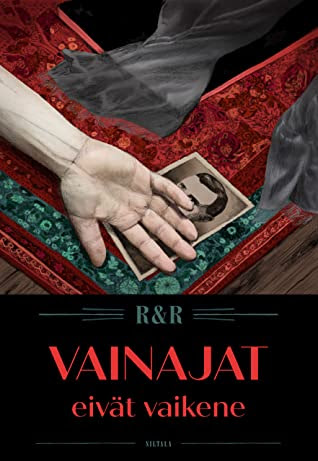
Sari Rainio, Juha Rautaheimo: Vainajat eivät vaikene


Uuden sarjan ensimmäinen osa. Rikosylikonstaapeli Ville Karila hälytetään päivystysvuorollaan tarkistamaan kotoa kuolleena löytynyt keski-ikäinen nainen. Nainen makaa upean, suuren ja kalliisti sisustetun asuntonsa lattialla rauhallisen näköisenä. Ihan kaikki ei näytä olevan kunnossa ja lopulta varmistuu persoonallisen oikeuslääkäri Viola Kaarion tekemässä ruumiinavauksessa, että nainen on kuristettu. Hän on ollut syrjäänvetäytyvä, ailahteleva ja oikukas, mutta rikas, ja hänen iäkäs isänsä on maan rikkaimpiin kuuluvia. Naisen elämä oli muuttunut parin vuoden aikana, koska hän oli alkanut ilmeisesti ensimmäistä kertaa elämässään vakavammin seurustelemaan miehen kanssa. Osapuilleen kaikki naisen tunteneet olivat täysin varmoja siitä, että kyseessä oli auervaara, naisia taloudellisesti hyväksikäyttävä huijari. Miestä vain ei löydy mistään - joten siinähän on ilmiselvä ehdokas syylliseksi. Ihan niin yksinkertainen tapaus ei (tietenkään) ole.  Tutkimus etenee hitaasti - kuten kirjakin. Kerronta on hyvin rauhallista eikä sivujuonia, esim. kalastusmatkoja tai hiukan Asperger-vaikutelman antavan Viola Kaarion ongelmia vältellä eikä tunnu olleen tarpeenkaan välttää. Henkilökuvaukset olivat kauttaaltaan herkullisia, hiukan ehkä liioittelun puolelle meneviä mutta silti nautittavia. Se mikä oli yllätys, oli se, kuinka kesken kirja jäi sekä murhajuonen, että henkilöiden keskinäisten suhteiden tasolla. Siinä määrin hyvä kirja tämä oli, että tässäkin odottaa seuraavaa osa ihan innolla - onneksi se ilmeisesti on tulossa jo tänä syksynä.  


The first part of a new series by new authors. A wealthy eccentric woman has been found dead. It turns out that she was strangled. Crime inspector Ville Karila is trying to find the perpetrator with the help of his police team and the criminal pathologist, Viola Kaario. It seems the woman was involved with a Casanova style of a charlatan who got his money by scamming wealthy late middle-aged women. Surely, he is guilty of the murder- especially as he seems to have disappeared. But the case turns out to be more complicated than that. Very entertaining book which was written in a leisurely style, and the events were not hurried. The near caricature-like personalities of the characters were well described and felt alive. The end of the book was left partly open, and I am looking forward to the next part.   

478 pp. 

Sunday, July 17, 2022

She Who Became the Sun (The Radiant Emperor #1) by Shelley Parker-Chan


 The next Hugo nominee. The story is set in an alternative version of ancient China during the end of Mongol rule. The protagonist of the book, Zhu, is a daughter of an impoverished family which doesn’t have enough food. After visiting a fortune teller her brother was promised to have a glorious future filled with greatness. She was promised to have no future at all. During a famine, some bandits come to her home and try to torture her father for hidden food. It turns out that there is no food - hidden or not. Her father and her brother are killed though. So she decides to take her brother's destiny to herself, starting by going to the monastery he was supposed to go to. She gets to the monastery through sheer perseverance and manages to keep her gender hidden. She makes friends and copes pretty well, but keeping her secret isn’t always easy and sometimes demands ruthless acts.

The second story in the book is about military officers of the Mongol army. A prince has offered a commanding role to a eunuch. He has been criticized for that, but the eunuch seems to be an extremely efficient (and ruthless) leader. Also, the prince might have some feelings toward the eunuch, but the eunuch might have his own agenda. The political situation isn't simple and there is a lot of scheming.

Eventually, the stories start to cross. When Zhu is just going to be appointed as an official monk, the monastery is raided and destroyed by the Mongols. After some events, she ends up working with rebel forces who try to defeat Mongol rule, with great success. By trusting her legacy (she believes she got her brother's legacy after she took over his name) and being ready to do almost anything for it, it starts to seem that she is certainly bound for glory.

I wasn’t really looking forward to the book, as it belongs to a subgenre I am not a great fan of. But I was very pleasantly surprised after the first part. When the emphasis transferred to political scheming among the Mongols, the pace of the book seemed to sag for a while. However, towards the end the book very much regained its momentum and turned out to be a very pleasant surprise. The main heroine/hero (who is very much non-binary) was a captivating person with more than just shades of grey. The writing was very good and the plot was imaginative.   


416 pp.

Kati Hiekkapelto: Kolibri (Anna Fekete #1)


Itselle uuden sarjan ensimmäinen kirja, joka on kuunneltu äänikirjana automatkoilla. Anna Fekete aloittaa Oulussa rikostutkijana. Hän on Jugoslavian unkarilainen, joka on tullut lapsena Suomeen pakolaisena. Hän on pitkälti suomalaistunut, osaa mm. puhua suomea käytännössä täydellisesti ja ilman mitään vieraita korotuksia. Toisaalta hän kokee jonkinasteista juurettomuutta, on hiukan kahden maan välissä, mutta vähemmän kuitenkin kuin alkoholisoitunut/alkoholisoitumassa olevan veljensä, joka ryyppäämisen välillä pyörii jugomafian liepeillä. Annan ensimmäinen työpäivä alkaa heti kiireisenä, käsiteltäväksi tulee parikin tapausta: mahdollisesti kunniaväkivallan uhriksi joutumassa oleva teini-ikäinen kurdityttö ja melkein päättömäksi haulikolla ammuttu nuori lenkillä ollut nainen. Kurditytön kanssa on hiukan epäselvää, onko jotain tapahtunut, koska tyttö itse väittää soittaneensa hätäpuhelun painajaisunen jälkeen. Rikostutkijat eivät tätä selitystä oikein usko. Tapetun naisen tapauksessa johtolankoja aluksi näyttää olevan niukasti, mutta kun osoittautuu, että tytön poikaystävä harrastaa metsästystä ja on kadonnut kotoaan ilman, että kukaan tietää missä hän on, tapaus alkaa näyttää yksinkertaiselta. Mutta sellaiseksi se ei todellakaan osoittaudu, etenkin kun kuolema ei jää ainoaksi.  Annalla on omat ongelmansa sopeutua työyhteisöön, eikä hänen työparinsa, pahasti viinaanmenevä ja rasitissävyisesti ajatteleva myöhäiskeski-ikäinen mies sopeutumisessa varsinaisesti asiaa helpommaksi tee. 

Pätevä avaus uudelle sarjalle. Kielellisesti kirja oli hienoa tekstiä ja aika erilainen aikaisempaan kuuntelemaamme Jarkko Sipilän kirjaan, joka kieli on kuivakkaan kliinistä. Myös juoni oli mielenkiintoinen ja sopivan mutkikas, vaikka loppuratkaisu hiukan taivaalta tipahtikin. Pakolaisten ja ulkomaaperäisten elämästä kirja sisälsi hyvää kommentointia. Mielellään tätä kuunteli ja itse asiassa seuraava osa on jo äänikirjana ostettu. 


The first part of a series. Anna Fekete arrived as a refugee in Finland as a child. She speaks perfect Finnish with no accent. In spite of that, she has had some problems with adjusting – she feels that she falls between two different cultures. She starts her first day as a criminal investigator at the police department of a largish city. Her working partners seem nice, except for one middle-aged overweight man with a pretty apparent alcohol problem who seems to have some pretty racist attitudes. And guess who is going to be Anna’s partner? On her first day, there are two new cases: a young Kurdish girl who might be a target of honor violence and a young woman who has been practically decapitated by a shotgun blast while running on a forest track. Both cases turn out to be harder than they seem and need diligent work before they are solved. A nice and well-written book with some fairly serious social commentary. The description of people and their lives and thoughts is lively and easy to believe. The only downside was the ending which was a bit unpredictable. I have already bought the second part, though…

378 pp. 

Thursday, July 7, 2022

Nimeni on Lucy Barton (Amgash #1) by Elizabeth Strout (My Name Is Lucy Barton)


 Tuleva (?) kirjailija on sairastunut komplisoituneeseen umpisuolentulehdukseen ja joutuu viettämään viikkoja sairaalassa. Hänen aviopuolisonsa, joka ei kovin usein ehdi häntä tapaamaan työnsä ja kahden pienen lapsen hoitamisen vuoksi, on pyytänyt naisen äidin käymään. Naisella ja hänen äidillään ei ole ollut käytännössä mitään yhteyksiä vuosiin, mutta äiti tulee sairaalaan ja istuu tyttärensä vuoteen vieressä. He eivät ole juuri koskaan keskenään keskustelleet mistään, mutta nyt juuri muuta ei ole tehtävää. Heidän keskinäiset keskustelunsa kostuvat juoruilusta tuttujen ja entisten naapureiden enemmän tai vähemmän kurjista kohtalaista, mutta samalla ilmeisen kurjaa ja hyvin köyhää kotielämää sivutaan aina välillä hiukan - lisäksi Lucy muistelee mennyttä ilmeisesti samalla torjuen osan asioita mielestään. Tärkeämpää taitaa olla se mistä ei puhuttu kuin se mistä puhuttiin. Lucy samalla miettii omaa elämäänsä, suhdetta mieheensä ja kirjoituskurssia, johon hän oli ottanut osaa ja jolla oli opettanut naiskirjailija, joka oli ollut Lucyn esikuvana. 

Kirja oli lyhyt, oikeastaan pienoisromaanin mittainen. Se joka tapauksessa onnistuu pakkaamaan todella paljon asiaa vähäiseen sivumäärään, vaikka varsinaisesti siinä ei juuri kovin paljoa tapahtumia ole. Elisabeth Strout onnistuu taas kerran pakkaamaan paljon pieneen tilaan ja kaikki kauniilla ja samalla helppolukuisella kielellä. Todennäköisesti tässä on omalta osaltaan kiittäminen kirjan kääntäjää, joka on onnistunut hienosti tuottamaan kaunista ja sujuvaa kieltä.

A concise and very well-written book about the relationship between a mother and a daughter. The daughter is in a hospital, and the mother arrives to keep her company. They haven’t had much contact for years, and they discuss their past - mainly through other people, such as neighbors and friends. They were very poor and life hadn’t been easy. Even more important are things they don’t discuss but are only referenced by short excerpts and when the woman reminisces about the past, as well as things that are not mentioned at all. An excellent book.


164 pp 


Sunday, June 19, 2022

Hit or Myth (Myth Adventures #4) by Robert Lynn Asprin


Magician apprentice Skeet has more adventures. This time, his teacher, Aahz, is forced to leave the dimension where they have lived for a while due to family matters, so he is left to manage things alone. The King asks for his help - he has some pressing matters to do and needs Skeet to impersonate him for a few days. Well, it would be nice to be a king for a while. At first, being a king is both interesting and boring while solving quarrels between people, but then the future queen arrives. Apparently, there was an agreement between two nations about the sovereigns marrying each other. The future bride is a bit frightening and, according to rumors, a few suitors have met an untimely death so it starts to appear that the king had a very good reason to disappear at just this time... ..and there is no trace of him anywhere. That is a slight problem and troubles don’t get less when a criminal organization demands compensation for some events in the earlier books. Eventually, everything naturally works out and Skeet and  Aahz (who are reunited by the end of the book) get paid by two different parties doing opposite things which cancel each other out - meaning they are doing nothing. Another fine and fairly funny part of the series. 


208 pp. 

Thursday, June 9, 2022

Torgny Lindgren: Taiteilija Klingsor (Klingsor)


Erikoinen kirja erikoisesta taiteilijasta. Klingsor sai taiteellisen herätyksen löydettyään metsästä esi-isänsä sinne unohtaman hiukan vinon juomalasin. Loppuelämänsä hän maalasi käytännössä vain erilaisia (tai samanlaisia) variaatioita tuosta lasista. Kirja on eräänlainen elämäkerta hänestä. Ainakin elämäkerran kirjoittajien mielestä ja heidän mukaansa hän on maailmankuulu taiteilija, vaikka hän ei pitänyt kuin yhden näyttelyn maaseudulla, eikä häneltä jäänyt jälkeen montaakaan tunnettua teosta. Klingsor oleskeli mm.  kunnon taiteilijatyyliin Pariisissa, tosin hän ei siellä taiteilijoita tavannut vaan vain vetelehti taidekoulujen edessä kadulla saaden vaikutteita hiukan ikkunoista vilkuillen. Hän myös väitti käyneensä pääkaupungissa taidekoulussa, tosin kukaan sieltä häntä ei muista tavanneensa. 

Klingsorista tulee aika Asperger tyyppinen vaikutelma – tunteiden käsittelyssä on ongelmia, eikä edes puolison kuolema häntä suuremmin liikuta, kun on uusi variaatio asetelmamaalauksesta kesken. Sitä, miksi hän suurena taiteilijana pidetään, ei tule ilmi kirjasta. 

Kirja oli aika omituinen ja oli hiukan vaikea hahmottaa mikä sen tarkoitus oli. Toisaalta siinä oli ilkikurinen sävy, toisaalta Klingsoria, joka ei ihan täysin tuntunut aina kartalla olevan huolimatta kovista pyrkimyksistä elää täysipainoista ”taiteilijaelämää” kävi jopa välillä sääli. Vai oliko kirja tarkoitettu jonkinlaiseksi elämäkertojen parodiaksi? Varsin erikoinen kirja varsin erikoisesta persoonallisuudesta kyseessä kumminkin oli. 


This is an unusual pseudo biography of an imaginary painter who always painted variations of more or less the same still life. He lives an artist’s life, and even spends time in Paris, but doesn’t meet any other artists as he spends most of his time on the streets near art schools. His behavior is more or less autistic, but somehow, he is supposed to have international fame, though only few of his paintings remain in existence. A strange book – an ironic take on artist biographies? Or something else? I really don’t know.  


194 pp. 


Wednesday, June 8, 2022

Seinää vasten (Takamäki #8) by Jarkko Sipilä

Pitkästä aikaa oli luettavana (tai kuunneltavana) Kari Takamäki-sarjan kirja. Keskisarjan konna löytyy vanhasta varastosta ammuttuna teloitustyyliin. Atari-ryhmän poliisi Suhonen oli saanut vinkkimieheltään (joka itseasiassa oli enemmän tai vähemmän narutettu hävittämään ruumis) vinkin teosta, ja soluttautuu alamaailmaan lahtelaisena pikkurikollisena Suikkasena. Soluttautumisessa hän joutuu menemään jo vähän pidemmälle kuin lain harmaalle alueelle, mutta lopulta onnistuu asiassaan hyvillä tuloksilla – tosin joutuen moottoripyöräjengin tappolistalle samalla. Kovin isoja yllätyksiä kirjassa ei ole, se mikä näytti rikollisten keskinäiseltä välien selvittelyltä myös oli sellaista.

Kuten aikaisemmatkin osat kirja on aika kliinistä poliisityön kuvausta ilman, että poliisin henkilöön tai perhe-elämään otetaan oikeastaan lainkaan kantaa. Mielestäni teos jäi sarjassaan keskitason alapuolelle, mitään erityisen kummallista tai poikkeuksellista siinä ei ollut – tosin ei varmaan aina kaikessa tarvitse ollakaan.


Police inspector Takamäki is trying to find out who killed a middle-level criminal at an abandoned warehouse. An experienced undercover cop infiltrates criminal organizations and finds out the culprit. He is forced to work in a grey zone, between legal and illegal activities – and ends up on the kill list of a motorcycle gang who is aware that he is a cop. As usual, the book consists of a rather clinical description of police work, and the interpersonal conflicts and the family life of the police personnel are mostly ignored. This book felt fairly ordinary and was a below average installation in the series.  

300 pp.