Wednesday, August 22, 2012

Analog Science Fiction/Science Fact, May 1971


About average issue for its’ time.


Company Planet • [Telzey Amberdon] • novelette by James H. Schmitz
An extremely smart female agent in some kind of underground legal organization, Telzey Amberdon, who also has extremely powerful psychic powers is evaluating a planet where cosmetic surgeons perform very elaborate operations. They are so effective that no one seems to return from the planet without extensive surgery. As usual, she is ends up as kidnapped, but naturally she easily beats all adversaries. An overlong and pretty tedious story. By far the worst I have read in this series. **½
Not Stupid Enough • shortstory by George H. Scithers
One of the first visitors on an alien planet starts to preach against the vile sexual habits of the inhabitants: they routinely have group sex and routinely swap partners. The story goes about the way you would expect. ***-
Culture Shock • novelette by Perry A. Chapdelaine
Aliens have come to earth. The trade of ideas has given many fine inventions for humanity, but there are factions who vehemently oppose the aliens. The story is mainly extremely longwinded discussion between several people about the situation and it is extremely boring. Very overlong story. The writing is ok, but that doesn’t save the story. **-
Peace With Honor • novelette by Jerry Pournelle
A party has ruled US for several years. For the first time in a long time, they are facing severe competition in a presidential election. They scheme how to throw the election and device an extremely unethical way to manage it. I am baffled: were these supposed to be the good guys who are forced to drastic methods to keep the peace, because their party is the only one which is supposed to be able to keep the status quo? Why the main competive party would be so disastrous a choice isn’t stated very convincingly. Or are they supposed to be the bad guys? Or are all politicians supposed to be corrupt bastards ready to sacrifice their daughter to stay in power? Writing was ok, but without knowing the background of the story it felt pretty confusing. ***

Wednesday, August 15, 2012

Kurt Vonnegut: Piruparka (Jailbird)


A pretty standard Vonnegut yarn about a man who has failed in life, more or less. Probably the worst book by Vonnegut I have read - but even as such an average or even above average book.

Vonnegutin kirja jonka varmasti olin lukenut aikaisemmin aikoinaan kirjan ilmestymisen yhteydessä. Mitään muistikuvia juonesta ei enää ollut, ja kun kirja sattui vastaan bookmoochin sivuilta ajattelin käyttää aika runsaita ylimääräisiä pisteitäni. Lukiessa sitten jonkinlaisia muistikuvia heräsi: kyseessä on Vonnegutille aika tavanomainen yksinäisen, epäonnisten tapahtumien, huonon onnen ja yleisen saamattomuuden sekä alhaisen kunnianhimon vuoksi elämässään epäonnistuneen miehen muistelmia tajunnanvirtana, joka syrjähtelee edestakaisin, aina välillä mennen sivuhenkilöiden elämään. Vonnegutin tuotantoa kokonaisuutena ajatellen tässä ei ollut kyse mistään varsinaisesti uudesta tai edes hyvin kirjoitetusta tuotoksesta vaan enemmänkin vanhojen teemojen kertauksesta. Kyseessä on varmasti heikoin Vonnegut mitä olen koskaan lukenut - ja olen käsittääkseni lukenut ne kaikki jossain vaiheessa. Käännöksessäkin oli yksittäisiä kömpelyyksiä. Pitää varmaan kaivaa vaikka Teurastamo no. 5 jostain, jotta saa tästä kirjasta aiheutuneen hieman ummehtuneen maun pois suustaan. Tietenkin kokonaisuutena tämä oli ainakin keskitasoinen tai lähes keskitasoa parempi kirja, vaikka nyt kirjoittajansa huonoimmasta päästä sattuu olemaankin.

 269 s.

Tuesday, August 14, 2012

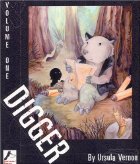
Digger by Ursula Vernon


A dauntingly thick graphic novel. I got this as a part of the Hugo voter’s package. I usually haven’t read (at least all nominees) of this category. I first just glanced at this: 700+ pages (!) and a drawing style which at the first glance didn’t really seem like my cup of tea. Later when I found more than a few very praising reviews I decided to take a second look. After a few pages I was hooked. A wonderful tale of a very matter of fact and humanistic wombat who finds himself far from home. He befriends several eccentric characters and must partake a quest involving gods and demons. As he isn’t especially religious he tends a have a polite detachment towards various supernatural beings. A fun and entertaining story which is only very slightly overlong. It had some very nice dry humor and more than a few very thought provoking and interesting considerations. This got my vote in the Hugo voting – the only vote I cast in the category. All the other nominees were umpteenth parts of continuing series which didn’t really work as itself.

Sunday, August 12, 2012

Anne Holt: Presidentin salaisuus (Death in Oslo)


The first female president of USA disappears without any explanation while she is on her first state visit in Norway. Is this an Islamic terrorist attack or a more domestic conspiracy? Smoothly flowing and exiting book. The person who I thought would be the main character was just a supporting character.

Ensimmäinen tältä kirjailijalta lukemani kirja. Yhdysvaltain ensimmäinen naispuolinen presidentti katoaa Norjassa jäljettömiin huoneestaan kesken valtiovierailun. Onko takana islamistiterroristien juoni vai jokin muu salaliitto? Ja presidentillä näyttää olleen jotain salattavaa, mikä yhteys tällä on mysteeriin? Hiukan hämäävästi kirjasarjan päähenkilö on tässä osassa vain sivuosassa, eikä anna mitenkään sympaattisen henkilön vaikutelmaa. Ehkä muut sarjan osat sitten tulevat muuttamaan vaikutelmaa. Ehkä eniten häiritsevä piirre oli tässäkin kirjassa ajoittain esiintynyt ”best-seller” tyylinen lukujen päättäminen cliff-hangereihin – niin kiusaavaa tämä ei kyllä ollut kuin monessa muussa kevyemmässä teoksessa. Hyvin sujuvaa ja viihdyttävää tekstiä, hyvin kirjoitettua ja paljon mukavampaa luettavaa kuin joillain kotimaisilla naisdekkaristeilla, esimerkiksi sellaisen jonka uusimmat kirjat kertovat idiootin naispuolisen henkivartijan seikkailuista.
419 s.

Tuesday, August 7, 2012

Analog Science Fiction and Fact, October 2012


An average or somewhat above average issue.

The Liars - novelette by Juliette Wade
Two idiots who have not bothered to find out anything about the planet they are visiting (not even that the local intelligent aliens are nocturnal) and meddle with things they really don't understand, anthropomorphise alien behavior and generally make a mess. The writing was ok, but the immense stupidity of the main characters was grating to my nerves. ***-
Nahiku West - novelette by Linda Nagata
A sort of cyberpunk detective story. There is a murder attempt against a man who survives as his has been augmented to withstand low atmospheric pressures. However, that sort of enhancement is against law and punishable by death. The detective's wife also has some improvements, and she is assigned for a genetic review. The writing is pretty good, but the story is hurried and would have needed a longer form. Also the "detective story” part of the story sucked BIG TIME as the solution of the mystery depended totally on technology which wasn't described beforehand. ***-
The Journeyman: On the Short-Grass Prairie - novelette by Michael F. Flynn
Two members of different tribes (both on a journey of sorts) meet on an alien planet where a human colony has reverted to mainly nomadic lifestyle. Good writing but apparently just an excerpt - at least it feels like it and a most of the story is only setting things up. Reminds me a lot of Fritz Leiber's writing. Somehow I am getting flashbacks of "Ill Met in Lankhmar". The best story in the issue. ****-
Ambidextrose - shortstory by Jay Werkheiser
A man crashes during a reconnaissance flight and is a sole survivor. He is rescued by a woman who miraculously seems to be able to survive on alien which was supposed to poisonous - or at least not nourishing - as the amino acids are mirror images of the usual ones. It turns out that there are some possibilities and the life on the planet isn't black and white. Ok, a simple story. ***
Deer in the Garden - shortstory by Michael Alexander
A man tries to sabotage a future society where a computer assisted surveillance covers everything. He tries to beat it using several methods, but doesn't succeed. The reason why he doesn't succeed isn't too plausible, and the story is too short. The writing is fine, though. ***-
Reboots and Saddles - shortstory by Carl Frederick
Horses are fitted with a computer aided control system. It won't work as expected. A short and simple story. ***-
Nothing But Vacuum - shortstory by Edward McDermott
Moon landing ended in disaster and the crew of the space ship isn't able to contact the mission control on earth because their radio transmitter has broken down. A problem solving story, where the title of the story is a hint of a solution. ***
The End in Eden - shortstory by Steven Utley
Smuggling through time is a lot of trouble and can be a bureaucratic nightmare as it involves so many different government agencies, especially when the object of smuggling is a biological sample. A light story with a lot of banter and a pretty sudden end. ***

Saturday, August 4, 2012

Blackout by Mira Grant


The third and final part of zombie trilogy. Fairly smooth writing as in the first two parts of the series, but has the same problems as the earlier installments. The heroine who died on the first part wakes up in a cloned body. CDC's super science not only has been able to grow a clone body which matures in a few months, but somehow they have been able to record the consciousness and memories from scraps of brain tissue blown on the walls of a car. The male hero mainly sits and ponders for the first half of the book. The good readably and nicely fluent writing conceals that little happens in a large part of the book. The flaws in logic are immense, all characters, especially the bad ones behave in extremely stupid ways, and the main secret they have been protecting is laughably inane. It seems that they are bad just because they are evil and want power. Why they want that power and how they would use it is mostly left open. Also, apparently the super evil CDC from the USA is easily able to control the entire WORLD with their conspiracy. Book which was really harmed by the immense stupidity of plot. I hoped that the final act would have given nice explanations for the logic flaws in the earlier parts, but that didn’t happen, on the contrary, everything was made even stupider. Apparently, the young bloggers are SO trustworthy and popular, that even the word of US president wouldn’t be taken seriously if they wouldn’t be vouching for it – otherwise the ending doesn’t make ANY sense. I guess it DOESN’T make any sense…
And Mira Grant HAS to be a millionaire for all that money she must get from the Coca Cola Company, at least the text advertising for Coke was so irritating and blatant that there could be no other reason.

672 pp.

Tuesday, July 24, 2012

Galaxy Science Fiction, January 1951


The fairly new magazine was still seeking its’ tone. This bunch of stories was mainly pretty bad and from today’s perspective very old fashionable.


Dark Interlude • shortstory by Fredric Brown and Mack Reynolds
A visitor from the future comes to observe what life was like in 20th century earth. He ends up in a rural area, falls in love with a beautiful local girl, and life seems to be pretty good. Until a horrible fact about his heritage is revealed: he is a quarter "nigger". Naturally there is only one thing girl's family can do: kill the bastard. And local sheriff is naturally very sympathetic, what else they could have done? Not a bad story with a small end twist revealing attitudes the visitor from the future could never even have suspected. ***½
Rule of Three • novelette by Theodore Sturgeon
Three aliens who each consist of three subunits come to evaluate earth. They are horrified as everyone in earth seems to be infected by a dangerous space parasite which causes erratic behavior. They divide into subunits and inhabit humans to get a grasp of the situation. Afterward they have a lot of trouble to get together again, as humans tend to pair, and units of three are uncommon. (a slight mishap from the superpowerful aliens...) After a LOT of talking and scheming, they manage to get together again. A badly overlong and very talky story. There are some aspects which are interesting, though: alien parasites which cause all human neurosis and harm thinking, and are the cause of psychological problems, wars and violence, and psychotherapy is an extremely clumsy way of trying to address the problem, but it is possible to get rid of the parasites and clear you thinking. It sounds like the most of the most secret teachings of the scientology were lifted directly from this story and when one considers the time period it is practically certain that Hubbard read this story. Smells fishy to me… **+
Susceptibility • shortstory by John D. MacDonald
An inspector comes to a colony planet which hasn't been in touch for long time. The last inspector who visited the planet sent his resignation taped on the controls of his space ship which was sent to return on automatic drive. All colonists seem to live on countryside living simple life, and no one lives in automatic cities enjoying food made automatic machines and using product made by automatic machines. Soon this inspector sends his resignation as the simple life is so much more enjoyable...not bad, simple story. ***
Made to Measure • novelette by William Campbell Gault
For some unstated reason there are much more women than men. The women live in some sorts of centers, and men can come to meet them in controlled "well lighted" situations. If they like what they see, they get the women they want as a wife - but at any time they can return her to the centre - no questions asked. A man isn't happy with his wife as she isn't perfect. So he returns her to the centre and creates an android using his own mind set as a model. As can be expecting that doesn't work well. A pretty bad story. There isn't a single one half believable character. The story feels like something written by a 14-years old boy with no experience at all about any kind of human relations. *½
The Reluctant Heroes • novelette by Frank M. Robinson
There is a change of shift in a lunar colony where only men are working. There is a LOT of talking, about how wonderful it will be to get back to earth and bickering by one guy whose turn will continue. Little happens except one man gets a "Dear John" letter. There is a good reason for the letter, however. The writing was average. **+

Friday, July 20, 2012

Analog Science Fiction and Fact, April 2001


A pretty average issue.

May Be Some Time • [Captain Titus Oates] • novella by B. W. Clough [as by Brenda W. Clough ]
A member of Scott’s Antarctic exploration team (who disappeared without trace) is snatched to the future to escape a certain death as a test drive of alien technology. Not much happens in the story – it tells more about his adjustment to a radically changed world. A pretty nice and well written tale. The best in issue. ****
What Weena Knew • shortstory by James Van Pelt
Well’s “Time Machine” from the viewpoint of Teela, the young and innocent Eloii the Time traveler encounters in the future. She might not have been as degenerate as she seemed for the traveler. Another pretty good story. ***½
The Wanderlust • [Wally Mason] • shortstory by Brian C. Coad
A retired patent attorney gets a visitor who seems to be somewhat unbalanced. He doesn’t seem to be able to make any choices anymore. Too bad that everyone must make so many choices as all computer programs and appliances offer some many option to choose from. Probably best I have read in this story-series, but not especially good. Far too many different ideas for such a short story. ***-
Pressure Gradient • novelette by Pete D. Manison
A space ship has dropped on a Venus-like planet and a drone with a personality transfer style of AI is trying to find if anyone survived – or even was on the ship when it crashed). The AI in the drone is from a man who is in love with a woman who probably was in the ship.
The story is told at several time levels, and it turned out to be somewhat confusing. The short form didn’t allow enough space for the romance flow naturally or believably and the story felt too fragmentary. ***-
The Rise and Fall of Paco Cohen and the Mariachis of Mars • novelette by Ernest Hogan
The “suits” of a commercial Mars colony draft a singer to improve the sentiments of the colonists. He becomes pretty popular, but when he has served his purpose, he may go away. Not one of my favorites, fairly confusing and fragmentary, I didn’t like the writing too much. **
Talking Monkeys • novelette by Rob Chilson
Life on a colony planet where a significant percentage of the surface consists of diamonds. Machines break and wear easily, but most of the problems are caused by “monkey problems” i.e. human emotional problems. Another extremely fragmentary story, just “glimpses” of the colony life. Clearly better than the two former ones, though. ***